
Learning the basics of backyard gardening started with my family. My dad kept a small plot when we lived in Colorado and later grew roses and dahlias in California. For me, gardening is a way to honor him, and over time it also became my outlet for mental health and my connection to nature.
Like many people, the wake-up call came during the COVID-19 pandemic. Seeing empty grocery store shelves made me realize how fragile our food system is. I wanted to feel more independent, eat better, and pick up a skill that would last a lifetime. That’s when I decided to try growing my own food.
I’ll be honest—I wasn’t born with a green thumb. In my life, I’ve lost more houseplants than I’ve managed to keep alive. But curiosity and persistence kept me going. I read books, watched videos, asked questions, and learned from mistakes. Little by little, the fundamentals started to click.
I’m not a master gardener yet, but I’ve learned a lot about growing vegetables, fruits, and flowers. My goal here is to share what I’ve discovered and build a community of folks who want to learn and grow together. Sharing my experience and knowledge will provide you with a strong understanding of backyard gardening basics.
We’ll look at why you might start a garden, how to work with your zone and soil, which tools are worth buying, and the easiest vegetables and herbs for beginners. Along the way, I’ll share my own lessons so you can avoid some of the early missteps I made. Let’s kick things off with the basics: how to garden in your zone and climate.
Know Your Garden Zone and Climate

Where you live has a huge impact on the variety of plants you can grow, especially perennials. Gardening by zone and climate may sound complicated, but once you understand your zone and frost dates, it becomes much easier to navigate.
According to the USDA Plant Hardiness Zone Map I currently live in zone 7a. This means my temperatures can drop down to 0°F. It’s an easy reference for gardeners and growers to know which perennial plants can survive the winters. This does limit what I can grow, and it’s something you’ll want to think about when picking plants for your garden. Wondering which vegetables thrive in your climate? Our Understanding Garden Zones and Vegetables will walk you through zone-by-zone recommendations — coming soon!
Your location will also determine when you can start planting seedlings outdoors or start sowing your seeds. Your last frost date tells you when it’s safe to plant in spring, while your first frost date helps you know when the growing season will end. Understanding that the predicted frost dates are well educated estimates that let you plan and watch the weather so you can start at the right time. Don’t stress if this feels confusing at first. Once you’ve checked your zone and frost dates a couple of times, it’ll become second nature. For more details you can check out Old Farmer’s Almanac Frost Dates Tool.
I lost a few plants my second season because I planted them out exactly the day after my last frost date. Unfortunately we had a cold snap that decimated these seedlings, but I was fortunate enough to have started way more seedlings than I needed. The lesson: know your zone, respect your frost dates, and always plant with a little backup just in case.
Preparing Backyard Garden Soil
Knowing your climate is an important element in growing a successful garden, but knowing the soil conditions in your garden is just as important. I live in an area known for having a mix of clay loam, silty loam, and fine sandy loam. I tested my yard for drainage and found it to be less than perfect: it didn’t drain efficiently. Since I wasn’t planning on growing in-ground, this wasn’t a huge issue for me.
Testing Your Soil
If you are considering in-ground or a no-till method, it might be wise to get a soil test done. Understanding your soil type with an accurate test helps you understand the challenges your plants may face. You have a few options: at-home tests, mail-in tests with a private laboratory, or looking up your local cooperative extension office Cooperative Extension office I’d recommend the extension office solution as they can also provide information about the soil and conditions that the other two methods do not have. Healthy soil is the foundation of every garden, and our upcoming Building Healthy Soil for Your Backyard Garden will walk you through the process — stay tuned!
Choosing the Right Growing Method
Once you know your soil type, you can decide which growing method will work best for your garden. Space being a limiting factor may only let you grow in containers or pots. If you have more room, raised beds might be a better option if soil is a problem.
If your soil is healthy and well-draining, consider in-ground methods. Also consider that growing traditional rows will be limited in beds, and some varieties of vegetables will be more challenging in raised beds, but always possible with some ingenuity.
A successful garden means knowing your soil and how to adjust for its challenges. Once you understand the possibilities, you’ll be able to plan for a successful garden. It will save you time and heartbreak down the road.
Why Healthy Soil Matters
“Getting to the root of the problem” is a cliché that is often overused, but in gardening it’s all too true. Many issues can be resolved with having great soil health. A healthy garden starts with the roots, and the soil that protects and nourishes them. A plant’s roots are the source of nutrients, water, and a stable foundation. Because soil is where roots live, it plays a vital role in gardening. Having healthy, biodiverse soil goes a long way toward making sure your garden is thriving. Soil preparation for gardens helps prepare your plants for a healthy season. Building and maintaining healthy soil is key to every successful garden. We’ll cover it in more detail soon in Composting and Fertilizing Made Simple and Fixing Common Soil Problems.
Healthy soil will provide your plants with all the nutrients they need to grow strong, fight off pests and disease, and produce awesome fruits and vegetables. Don’t feel like you need to fix everything at once. Start simple, and your soil will improve year by year. Maintaining healthy soil means paying attention to local conditions and using methods like mulching, crop rotation, cover crops and a proper watering schedule.
Essential Gardening Tools Every Beginner Should Own

Getting ready for your gardening adventure starts with ensuring you have the recommended gardening tools for beginners. I will always recommend using the “buy once, cry once” philosophy with tools you will use on a regular basis. For specialty tools, see if you can rent or borrow instead of buying something that will just collect dust in your garage. For the most part, the tools I recommend are worth spending a little extra on so they’ll last you for years.
Core Essentials:
- Gloves: inexpensive rubberized gloves work great.
- Hand trowel: strong enough not to bend and resistant to rust.
- Watering can: Look for one with a removable spout and built to last.
- Hoe: Again, something that won’t break the first time you hit a rock or snag on a root.
- Pruning shears: going to need these to prune off suckers on your plants, to clean up dead foliage, and when you go to harvest.
- Wheelbarrow: Recommended for moving soil and heavy objects around the garden.
- A good hat: Make sure it covers your neck, ears and face!
There are a lot of other tools you might need as well. These are going to be a case by case basis thing, so consider what you already have or items you might be able to repurpose. Don’t feel like you need to go out and spend money on all of these at once. Slowly grow your tool set as you need them.
Nice-to-Have Extras
Depending on your garden, you might need other tools. For example:
- A sturdy hose and attachments for watering.
- A shovel or pitchfork if you’re planning a compost bin.
- Kneeling pad: not necessary but they are nice to have.
- Hori Hori knife: great for cutting, weeding, and digging.
- Leaf rake: not everyone needs one if they don’t have trees.
- Basic carpentry tools — saw, hammer, screwdrivers, measuring tape — if you’re building your own raised beds.
Consider what you already have and only invest in quality tools. These will be with you for years to come, so spend a little extra here to avoid having to replace them in six months.
In the coming weeks, I’ll be posting a full write up on the different tools I use and recommend. So stay tuned for my Essential Beginner Gardening Tools post.
How to Start a Backyard Vegetable Garden on a Budget
Starting a garden shouldn’t force you to spend a lot of money. Looking for ways to save some money can go a long way and open up new opportunities. I try to reuse as much as possible, and look for ways to use items that would end up in the landfill.
DIY & Repurposing at Home
Oftentimes you can repurpose materials you have. I built my compost bin using scrap 4x4s and some left over, untreated fence boards. I also used some of the untreated 2x4s I had from another project to build part of a raised bed. This has saved me a good amount of money over the years. I’ve also asked at construction sites if they had scrap materials to give away. Want to garden in a small space? Our upcoming Raised Bed and Container Gardening will share affordable ways to build beds and grow in containers.
Check your home for items you can reuse. If you don’t have a watering can, but you have a 5-gallon bucket and an extra measuring cup, use these to water the garden until you have the budget for a new watering can. A great resource is reusing things you’ve already paid for. Egg cartons can be used as seed starting containers, yogurt, cottage cheese and sour cream containers. Just drill a few holes in them and they can be used to start some seedlings.
Composting for Savings

Starting a compost pile is another great way to start conditioning your soil. It takes a little time, but by your second season you should have enough to supplement buying from the nursery. Check in with your local coffee shop and see if they give away used coffee grounds. These can be used in your compost. Good compost can reduce or even replace store-bought fertilizers, saving you money every season. This is also a great way to recycle food that would otherwise sit in a garbage dump rotting away.
Free Local Resources
Living in a rural area opens up opportunities for free materials like manure and straw. Call around or stop by the farms and ask if they have anything available. Make sure to ask about pesticides and herbicides so you don’t introduce a new problem to your garden.
Doing some research on local garden clubs and even the local botanical garden could save you some money as well. Often seed swaps or barter systems are encouraged and help alleviate some of the costs. Ask your local nursery if they have any old plant pots they are throwing away. Many local businesses are happy to give these away instead of throwing them out.
Finding Bargains
Facebook Market and Craig’s List are also alternatives you could check for anything free or on the cheap. I’ve found mulch, gravel, scrap wood and even soil posted for free. With a little work you can find some great free resources for your garden. Check the listing often as many of them disappear quickly.
Don’t limit yourself because the big box stores charge an arm and a leg for tools and materials. With a little creativity and research, you can build a thriving backyard vegetable garden on a budget — often for free.
Gardening doesn’t have to be expensive. In our upcoming How to Start a Backyard Vegetable Garden on a Budget post, we’ll share tips for starting small and saving money.
Planning Your First Backyard Vegetable Garden Layout
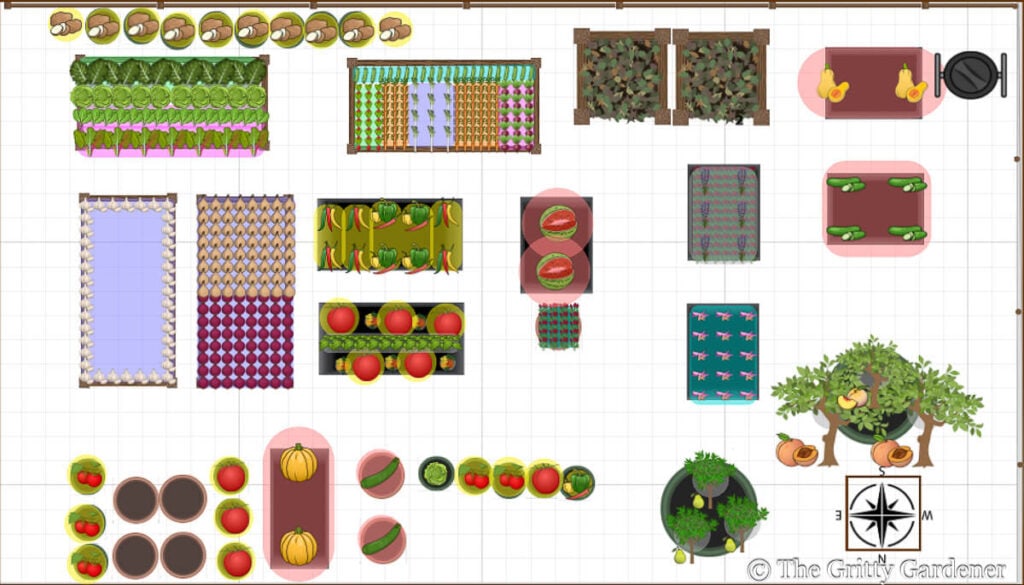
The seed is sown. You’re excited to start your garden, but one big question usually comes up: “Where do I start?”
There’s no one-size-fits-all answer. Every yard is different, and every gardener has different goals. The key is to choose a spot and layout that fits your space now and gives you room to grow later.
Choosing the Right Spot
A good location sets your garden up for success. Look for:
- Sunlight: Most vegetables need at least 6–8 hours of sun.
- Water source: Make sure you can easily water your plants.
- Soil: If you’re growing in-ground, test and improve the soil as needed.
If space is tight, grow bags and containers are flexible options. They’re easy to move and let you experiment without committing to a permanent bed.
Other Factors to Consider
Think about the plants you want to grow and how they’ll fit together. Place taller crops, like tomatoes or sunflowers, behind shorter ones so they don’t block sunlight. Companion planting is also worth keeping in mind. For example, marigolds near tomatoes can add color and help deter pests. We’ll cover the basics of companion planting in our upcoming Companion Planting Tips guide.
Keep Your Options Open
If you don’t have space at home, there are still ways to start gardening. Look into community gardens, ask a friend or neighbor about sharing space, or start with a simple container herb garden on your porch or balcony.
Planning the Layout
Once you’ve chosen a spot, take some quick measurements and sketch a layout. Leave room between beds or rows so you can reach plants easily and move tools or a wheelbarrow without hassle.
Start small and plan to expand over time. Your first layout doesn’t need to be perfect — think of it as a learning season. You’ll discover what works and what doesn’t, then adjust next year. Want fresh vegetables all season long? Our upcoming Succession Planting post will show you how to plan for a steady harvest.
There are also great online tools that can make this easier. One I like is The Old Farmer’s Almanac Garden Planner, which helps you map your space and choose plants. We’ll cover this in more detail in the dedicated layout post.
For a step-by-step plan, see our upcoming Planning Your First Backyard Vegetable Garden guide.
Takeaway: Your first layout doesn’t have to be flawless. Keep it simple, flexible, and workable for your space, and refine it as you gain experience.
Wrapping Up: Building Your Gardening Foundation
Starting a backyard vegetable garden may feel overwhelming at first, but it’s really about taking one step at a time. You’ve learned how your climate and zone affect what you can grow, why healthy soil matters, which tools are worth buying, and how to plan a simple layout that works for your space.
The goal isn’t perfection — it’s progress. Your first season will teach you lessons no book or blog can replace. Some plants will thrive, others may struggle, and that’s okay. Every gardener has been there.
Remember to start small, grow what excites you, and enjoy the process. Gardening is just as much about the journey as it is about the harvest. Over time, you’ll build better soil, make small improvements, and discover which vegetables and herbs truly make you happy to grow.
This is just the foundation. In upcoming guides — Backyard Gardening Basics: From Seeds to Harvest and Caring and Maintaining — we’ll dig deeper into planting strategies, crop care, and keeping your garden productive season after season. For now, the best thing you can do is get outside, put a seed in the ground, and see where it takes you. When you’re ready to plan what to grow, check out our Understanding Garden Zones and Vegetables.